
Before you start
The GC-400 forms are the Judicial Council’s standard account for conservators and guardians of the estate. Under rule 7.575 the Summary of Account, GC-400(SUM), is mandatory and the other forms may be used or matched in your own schedules. A smaller estate may qualify for the simplified GC-405 account; see when. Gather every statement for every account for the period, plus, for a first account, the statements from just before appointment (Prob. Code §2620(c)).
Step 1: property on hand at the beginning
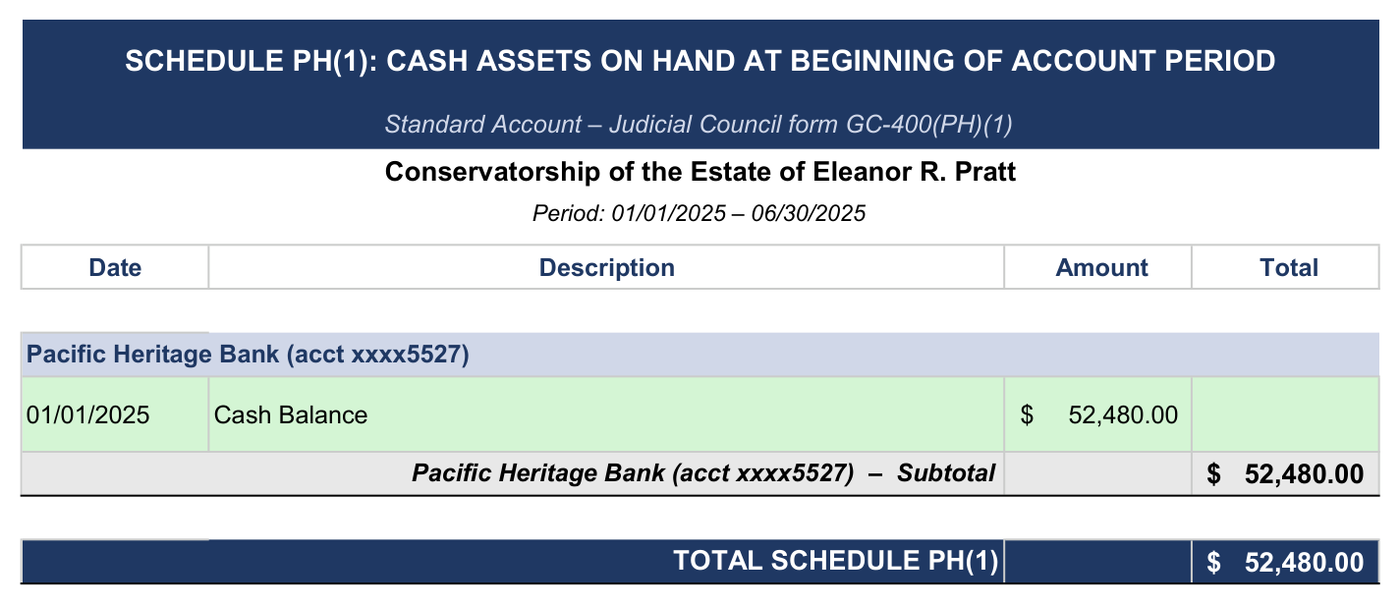
List cash on hand at the beginning on GC-400(PH)(1), account by account, and non-cash assets such as the residence or securities on GC-400(PH)(2) at carry value. For a first account, the starting values come from the inventory and appraisal.
Step 2: receipts, by category
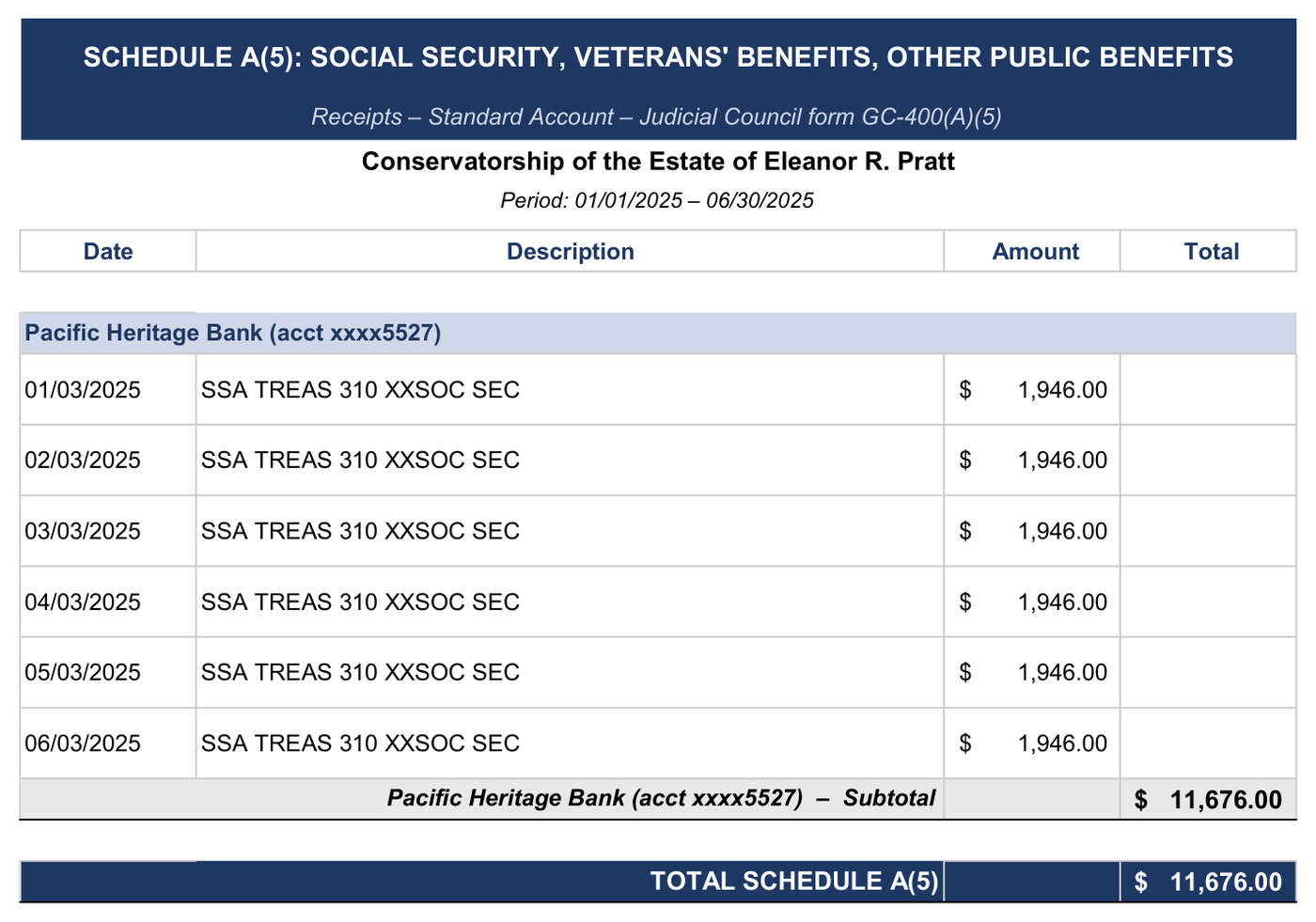
Each receipt goes on the A schedule for its category: dividends A(1), interest A(2), pensions and annuities A(3), rent A(4), Social Security and other public benefits A(5), other receipts A(6). Each line shows the date, the source and the amount.
Step 3: disbursements, by category
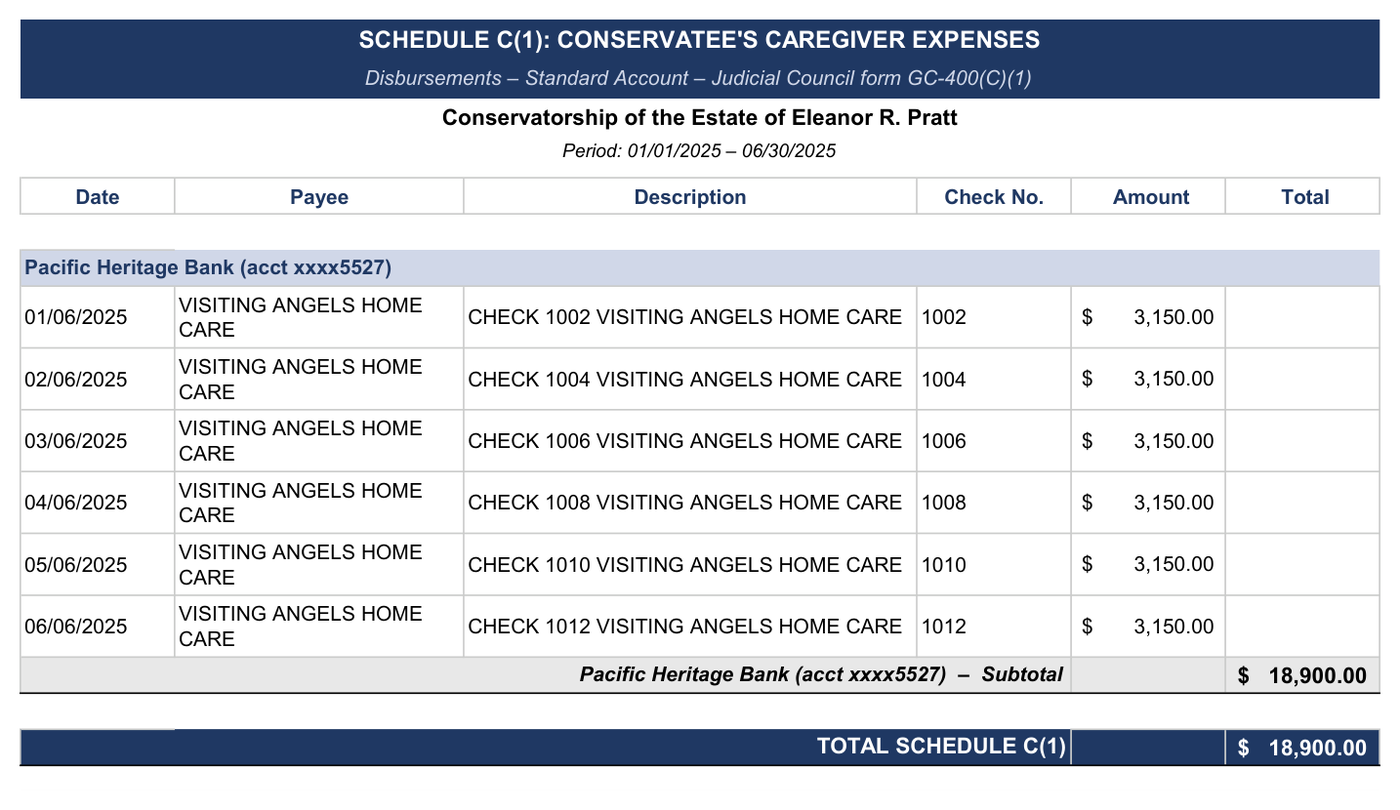
Each payment goes on the C schedule for its category, from caregiver expenses C(1) and care facility C(2) through fiduciary and attorney fees C(4), living expenses C(7) and medical expenses C(8). List check numbers, and for fees and distributions the date of the court order that authorized them.
Step 4: gains, losses and other items
Gains on sales go on GC-400(B) and losses on GC-400(D), each from carry value. Distributions to the conservatee or ward go on GC-400(DIST). Use GC-400(OCH) and GC-400(OCR) for other charges and credits.
Step 5: property on hand at the end
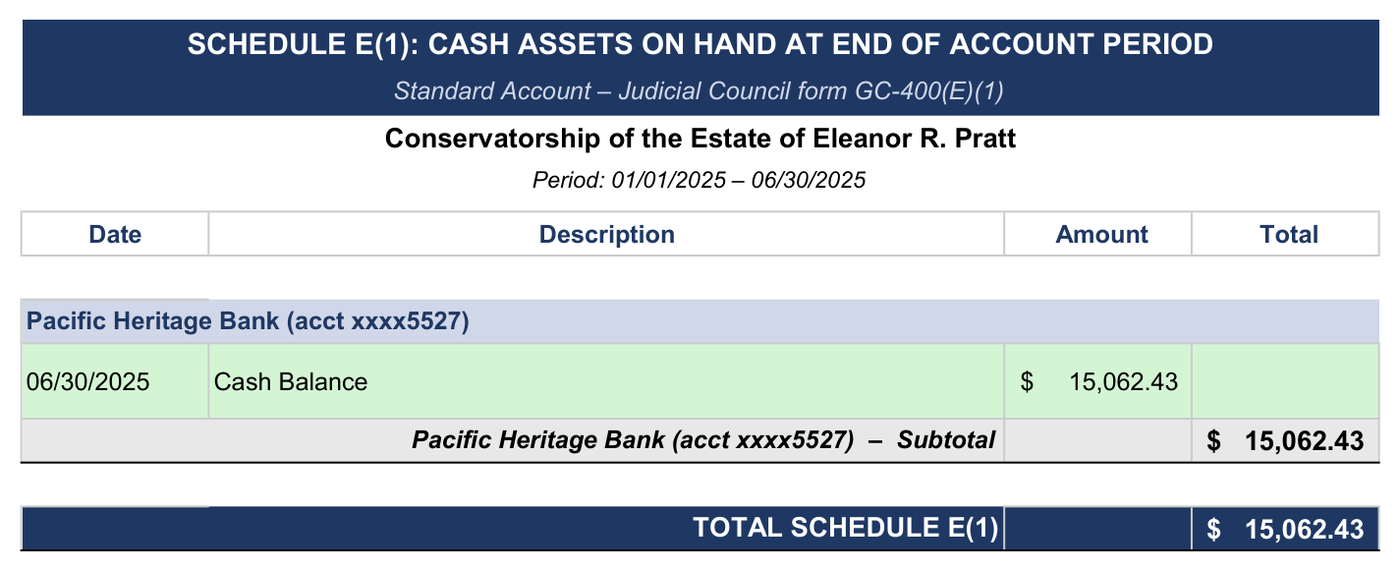
Cash at the end goes on GC-400(E)(1) and non-cash assets on GC-400(E)(2), at carry value. The cash on E(1) must match the closing statements you file with the account.
Step 6: the Summary of Account
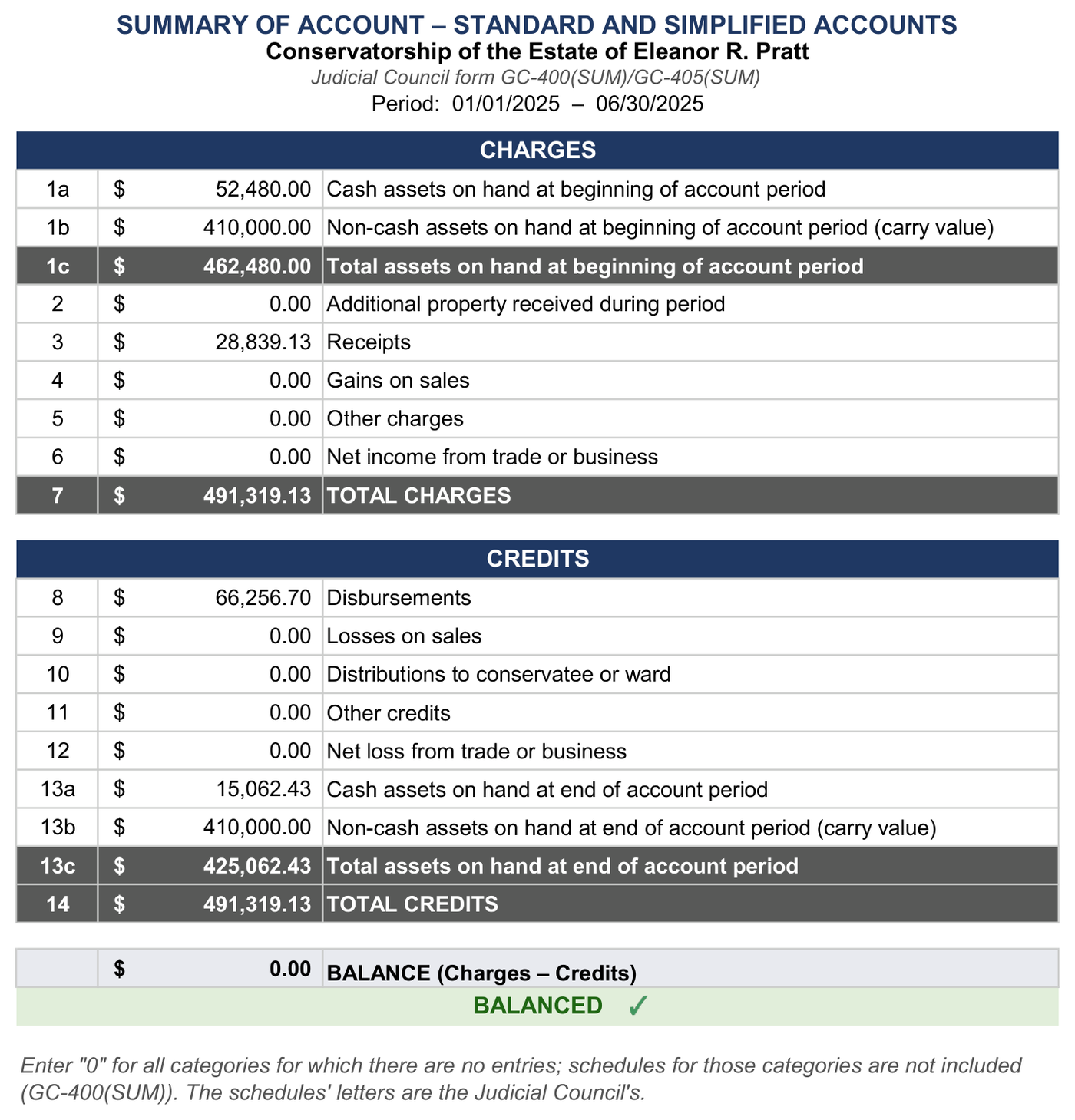
Carry each schedule’s total to its line on GC-400(SUM), and enter “0” on lines with no entries. Total charges must equal total credits.
Step 7: what to file with it
File the account statements showing the balances at the close of the period, and for a first account the statements from just before appointment; the closing escrow statement for any real property sold; and the original bills of any care facility. Information such as Social Security numbers goes in a confidential filing (§2620(c)).
Generate the GC-400 account with Balanced
Balanced is a new kind of software for California fiduciary accountings. From the PDF bank and brokerage statements, Balanced generates the GC-400 account in minutes to hours, rather than the days, weeks or months of manual work it otherwise takes: transactions classified to their schedules, carry values tracked lot by lot, each account reconciled to its own statements, the summary balanced to the penny, and each entry cited to the statement and page from which it was drawn, delivered as one fully editable Excel workbook. $699 per accounting.
See a complete sample GC-400 account, or start from the free GC-400 Excel template.